Branding

Branding

Monday, February 17, 2020

GRADES and EXTRA CREDIT

Grades are posted in the Grade Book (see link in sidebar).

Here is the information on the one and only extra credit assignment this term. You can earn 15pts for going to the morning session and another 15 for attending the luncheon (which is free). If you are coming, be SURE to go to the link and RSVP (list yourself as a student):
https://missioncollege.formstack.com/forms/women_in_leadership


Wednesday, February 12, 2020

FINAL: Research Paper & Debate

Due: 

Week 12 at 1:45pm MONDAY March 23:
(class will go for 2 hours - the full time)

Paper:

Minimum 5 pages arguing the position you have been assigned.

Paper Format: Double spaced, Times New Roman, 12 pt Font, 1 inch margins (MLA)

1. Introduce your topic, and state the resolution and your position
2. Then make at least 5 clear arguments, support your position using evidence
3. Last, give a conclusion - restating your resolution and position

DEBATE RESOLUTION:
Parents have the right to genetically modify their unborn child.
State use of the death penalty is just.

Research: 

Minimum 10 sources (minimum 5 non-internet sources)
Minimum 15 terms (underlined)
WORKS CITED (MLA format)


Rubric:

90 points paper (format, arguments, evidence)
50 points works cited (format, non-internet, total sources)
40 debate (arrive on time, be prepared, participate)
20 peer grade (determined the day of the debate)


Debate Format:

Opening Statements 1 per side (2 minutes)
Arguments 5 (one minute each)
Rebuttals 5 (one minute each)
Closing Statement 1 per side (2 minutes)


What to bring on the day of the final:
1. Paper/Works Sited
2. Any debate notes you want to use
3. Roster sheet of your group (one extra for Dr. Ramsey)
4. BLANK sheet of paper and a pen

NO LATE WORK, NO EMAILED Assignments
FAILURE TO ATTEND THE FINAL RESULTS IN AUTOMATICALLY FAILING THIS CLASS.


Example Resolutions:
Old school rap in better than New rap.
Parents should have the right to genetically modify their unborn child.
Thanos did the right thing.
Individuals in corporations should be held responsible for harming the public.
We should legalize the selling of human organs.
State use of the death penalty is just.
Iron Man is the strongest Avenger.
State use of drones on citizens is just.
The U.S. should repeal the second amendment.
Adult consensual prostitution should be legal.
In the U.S., students should be give free 2 year community/technical college tuition.


Wednesday, February 5, 2020

PP Notes Propaganda


          Types of Propaganda
          There are many techniques commonly used in spreading of propaganda. Use this handout to help you identify different types of propaganda throughout Animal Farm
          BANDWAGON
           The basic idea behind the bandwagon approach is just that, "getting on the bandwagon." The propagandist puts forth the idea that everyone is doing this, or everyone supports this person/cause, so should you. The bandwagon approach appeals to the conformist in all of us: No one wants to be left out of what is perceived to be a popular trend.
          EXAMPLE: Everyone in Lemmingtown is behind Jim Duffie for Mayor. Shouldn't you be part of this winning team?
          TESTIMONIAL
           This is the celebrity endorsement of a philosophy, movement or candidate. In advertising, for example, athletes are often paid millions of dollars to promote sports shoes, equipment and fast food. In political circles, movie stars, television stars, rock stars and athletes lend a great deal of credibility and power to a political cause or candidate. Just a photograph of a movie star at political rally can generate more interest in that issue/candidate or cause thousands, sometimes millions, of people to become supporters.
          EXAMPLE: "Sam Slugger", a baseball Hall of Famer who led the pros in hitting for years, appears in a television ad supporting Mike Politico for U.S. Senate. Since Sam is well known and respected in his home state and nationally, he will likely gain Mr. Politico many votes just by his appearance with the candidate.
          PLAIN FOLKS
           Here the candidate or cause is identified with common people from everyday walks of life. The idea is to make the candidate/cause come off as grassroots and all-American.
          EXAMPLE: After a morning speech to wealthy Democratic donors, Bill Clinton stops by McDonald's for a burger, fries, and photo-op.
          TRANSFER
           Transfer employs the use of symbols, quotes or the images of famous people to convey a message not necessarily associated with them. In the use of transfer, the candidate/speaker attempts to persuade us through the indirect use of something we respect, such as a patriotic or religious image, to promote his/her ideas. Religious and patriotic images may be the most commonly used in this propaganda technique but they are not alone. Sometimes even science becomes the means to transfer the message.
          EXAMPLE: The environmentalist group PEOPLE PROMOTING PLANTS, in its attempt to prevent a highway from destroying the natural habitat of thousands of plant species, produces a television ad with a "scientist" in a white lab coat explaining the dramatic consequences of altering the food chain by destroying this habitat.
          FEAR
           This technique is very popular among political parties and PACs (Political Action Committees) in the U.S. The idea is to present a dreaded circumstance and usually follow it up with the kind of behavior needed to avoid that horrible event.
          EXAMPLE: The Citizens for Retired Rights present a magazine ad showing an elderly couple living in poverty because their social security benefits have been drastically cut by the Republicans in Congress. The solution? The CRR urges you to vote for Democrats.
          LOGICAL FALLACIES
Applying logic, one can usually draw a conclusion from one or more established premises. In the type of propaganda known as the logical fallacy, however, the premises may be accurate but the conclusion is not.
EXAMPLE:
          Premise 1: Bill Clinton supports gun control.
          Premise 2: Communist regimes have always supported gun control.
          Conclusion: Bill Clinton is a communist.
We can see in this example that the Conclusion is created by a twisting of logic, and is therefore a fallacy.
          GLITTERING GENERALITIES
            This approach is closely related to what is happening in TRANSFER (see above). Here, a generally accepted virtue is usually employed to stir up favorable emotions. The problem is that these words mean different things to different people and are often manipulated for the propagandists' use. The important thing to remember is that in this technique the propagandist uses these words in a positive sense. They often include words like: democracy, family values (when used positively), rights, civilization, even the word "American."
          EXAMPLE: An ad by a cigarette manufacturer proclaims to smokers: Don't let them take your rights away! ("Rights" is a powerful word, something that stirs the emotions of many, but few on either side would agree on exactly what the 'rights' of smokers are.)
          NAME-CALLING
                 This is the opposite of the GLITTERING GENERALITIES approach. Name-calling ties a person or cause to a largely perceived negative image.

EXAMPLE: In a campaign speech to a logging company, the Congressman referred to his environmentally conscious opponent as a "tree hugger."

Monday, January 27, 2020

Target Midterm

REMEMBER:
Wednesday, 1/29 we are meeting at Target:
 
20745 Stevens Creek Blvd Cupertino, CA 95014
 
We will meet in the Target Cafe at 1:45pm and spend an hour in the store. 
BRING a pen and a print out of the terms WITH the terms you select, and something to write on.  ALSO bring something you can take digital photos with. You will be done by 2:45pm, giving you a half an hour to get back to campus.
Remember there are two bus lines which go there.
 
IF you have questions, email me.
Go Team!
Cheers, Dr. Ramsey
 
In Target, you will provide examples of 25 terms with photos. This is due at 1:30 on MONDAY 2/3. 
 
1. Popular Culture 
2. Branding 
3. Material Culture 
4. Spectacle 
5.Counter Culture
6.  Manchurian Consumer
7.  Placelessness 
8.  Infotoxin 
9.  Media Space 
10. Script 
11. Objectification
12. Diffusion 
13. Feedback loop 
14. Trend 
15. Carnival Theory  

10 terms which are NOT listed and do those as well.
 
These photos should be black and white and not take up more than 2 pages. In addition to these 25,select only 25 of these terms that you did NOT do for Target, and give at least one real life example and using your own words explain how the example fits the definition. 2pts. each

Popular Culture
Folk Culture
Authentic Culture
High Culture
Mallcondo Culture
Manchurian Consumer
Informational Conformity
Normative Conformity
Conformity
Branding
Institutional discrimination
Structural racism
Kitsh architecture/art
Communication Barrier
Culture Jamming
Globalization
Plentitude
Systematic positive Thinking
Conspicuous Consumption
Unreality
Reality Index
Tradition Controls
Material Culture
Custom
Habit
Cultural Appropriation
Capitalism
Desensitized
Product Craze
Placelessness
Lifestyle Clusters
Future Shock
Meme
Mass Culture
Diffusion
Noise
Propaganda
Pollution
Psychological Manipulation
Infotoxins
Media Space
Norms and Manners
Scripts
Rules
Roles
Detournments
Orthodoxy
Objectification
Consumer Culture
Statistical Data
Cultural Psychology
Systems
Feedback Loop
Place Conscious
Innovation
Taboo
Market Revolution
Bandura's Model of Social Cognitive Theory
Jolts
Huxleyan Soma
Wide Distribution
Essentialism


Wednesday, January 22, 2020

Reading: Pop Culture and Subculture

High Culture and Popular Culture

 Image result for high culture                                       Image result for popular culture music

Do you prefer listening to opera or hip hop music? Do you like watching horse racing or NASCAR? Do you read books of poetry or celebrity magazines? In each pair, one type of entertainment is considered high-brow and the other low-brow. Sociologists use the term high culture to describe the pattern of cultural experiences and attitudes that exist in the highest class segments of a society. People often associate high culture with intellectualism, political power, and prestige. In America, high culture also tends to be associated with wealth. Events considered high culture can be expensive and formal—attending a ballet, seeing a play, or listening to a live symphony performance.

The term popular culture refers to the pattern of cultural experiences and attitudes that exist in mainstream society. Popular culture events might include a parade, a baseball game, or the season finale of a television show. Rock and pop music—“pop” is short for “popular”—are part of popular culture. Popular culture is often expressed and spread via commercial media such as radio, television, movies, the music industry, publishers, and corporate-run websites. Unlike high culture, popular culture is known and accessible to most people. You can share a discussion of favorite football teams with a new coworker or comment on American Idol when making small talk in line at the grocery store. But if you tried to launch into a deep discussion on the classical Greek play Antigone, few members of U.S. society today would be familiar with it.

Although high culture may be viewed as superior to popular culture, the labels of high culture and popular culture vary over time and place. Shakespearean plays, considered pop culture when they were written, are now part of our society’s high culture. Five hundred years from now, will our descendants associate Breaking Bad with the cultural elite?

Subculture and Counterculture

A subculture is just what it sounds like—a smaller cultural group within a larger culture; people of a subculture are part of the larger culture but also share a specific identity within a smaller group.

Thousands of subcultures exist within the United States. Ethnic and racial groups share the language, food, and customs of their heritage. Other subcultures are united by shared experiences. Biker culture revolves around a dedication to motorcycles. Some subcultures are formed by members who possess traits or preferences that differ from the majority of a society’s population. The body modification community embraces aesthetic additions to the human body, such as tattoos, piercings, and certain forms of plastic surgery. In the United States, adolescents often form subcultures to develop a shared youth identity. Alcoholics Anonymous offers support to those suffering from alcoholism. But even as members of a subculture band together, they still identify with and participate in the larger society.

Sociologists distinguish subcultures from countercultures, which are a type of subculture that rejects some of the larger culture’s norms and values. In contrast to subcultures, which operate relatively smoothly within the larger society, countercultures might actively defy larger society by developing their own set of rules and norms to live by, sometimes even creating communities that operate outside of greater society.

Cults, a word derived from culture, are also considered counterculture group. The group “Yearning for Zion” (YFZ) in Eldorado, Texas, existed outside the mainstream and the limelight, until its leader was accused of statutory rape and underage marriage. The sect’s formal norms clashed too severely to be tolerated by U.S. law, and in 2008, authorities raided the compound and removed more than two hundred women and children from the property.

https://courses.lumenlearning.com/alamo-sociology/chapter/reading-pop-culture-subculture-and-cultural-change/

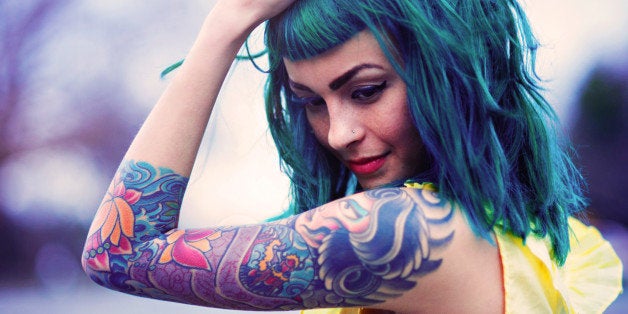
How Tattoos Went From Subculture to Pop Culture


How Tattoos Went From Subculture to Pop Culture

HuffPost


Let’s face it, tattoos have burst onto pop culture and have taken over the current media scenery. TV shows based on the tattoo industry are springing up on major networks, social media pages for tattoo culture are numbering in the millions of followers, and you would be hard pressed to take a walk on the street and not see several people sporting leg tats or arm sleeves. Not to mention all the pieces you see on the beach! Tattoos have become a mainstream part of society.
Today, 36 percent of Americans aged 18-25 have at least one tattoo, according to a report done by the Pew Research Center. That’s more than one third of America’s young adults! It comes as no surprise that the tattoo industry is the sixth fastest-growing retail business in America, as determined by the U.S. News & World Report. This has obviously translated to online interest as well, as there are more than 147 million tattoo related searches each month on Google.

How did this industry achieve this status though? Tattoos have certainly been scrutinized in the past and a visible feature that was once taboo has now become... normal?

Twenty five years ago, tattoos were actually quite common... on sailors, prison inmates, and members of tough motorcycle gangs. If you looked at accountants, pro ping-pong players, or shoe salesmen though, it would have been pretty rare to find some ink. So what happened?

Ironically, tattoos have been around since the beginning of human history. The word tattoo is thought to be derived from both the Polynesian “ta” — meaning “to strike” — and the Tahitian “tatau” — meaning “to mark.” So when and where did the tattoo originate? The answer to this question may remain a mystery, but scientific evidence proves that tattoos have been a part of human culture for thousands of years.

In 1991, German hikers on the Oztal Alps (near the border between Italy and Austria) discovered the mummified remains of a prehistoric human. Carbon dating would prove that the human, named Ötzi, had been mummified more than 5,300 years ago. While Ötzi was discovered with primitive tools and arrows, his most unique feature was that his body was adorned with no less than 57 tattoos, all the way from his upper neck to his ankles.

Findings like this continuously have proven that tattoos have been a part of human societies since their inception, as parts of rituals and cultures throughout history and across the globe.
Fast-forward to 2005. Our society still held prejudices against tattoos and, while some people were getting them on their own, no one would say tattoos were a part of pop culture. What changed this? The moment tattoos stepped into society’s limelight can be pinpointed to a very specific event: the launching of the first popular tattoo TV show, “Miami Ink”. A legendary shop on South Beach, “Miami Ink” housed a unique mix of talented and charismatic tattoo artists. Before this show, only the minority of people with tattoos knew what the inside of a tattoo studio was like. People weren’t privy to the amazing work being done there or to the dynamic personalities and various styles of different artists. It made for good TV though, so Miami Ink owner, Ami James, linked up with a major network and ran this reality TV show in his shop. It was a huge success and it changed everything.

Nine years later, Miami Ink has had six seasons and been aired in over 160 countries. Spin-off shows based on other shops (NY Ink and LA Ink, most notably) as well as Contest-Format shows (Ink Master) have also been largely successful. The shows opened the channels for the average Joe to look into this “underworld” of tattoos. To realize that the art is impressive, beautiful, and attainable. Every person can have an amazing tattoo. Every person can have their own unique tattoo. Having a tattoo can be an expression of who you are. Or what you believe in. Or something you cherish. Or just something you thought was fun. The prejudice, not having disappeared completely, is certainly greatly diminished.

Tattoo artists became celebrities. Artists like Ami James, Tommy Montoya, Kat von D, and Megan Massacre became famous for their appearances on these shows. Their art was suddenly the focus of mainstream media and their skills were known to all. Everyone wanted to get inked by them. So, naturally, other celebrities started getting inked by them. Rihanna, David Beckham, Angelina Jolie, and Adam Levine, are several examples of mainstream media icons that have tattoos and openly display them. It’s a part of who they are now. And fans of these and many other celebrities are now getting inked just like their idols.

Enter social media. Another game-changer for the tattoo industry. The same artists that gained celebrity status on the tattoo TV shows are now followed by millions of people on these platforms (and some of these followers don’t even have any tattoos of their own!). These same popular artists, or the individual users themselves, can identify new artists — the up-and-comers — that impress all with their unique and groundbreaking designs. Tattoo conventions are exploding in popularity, as everyone wants the chance to meet their favorite artists, post a picture with them on their profiles, and maybe even get a tattoo! And tattoo shops are now the place of legend — the home of major tattoo artists and a site to see in and of itself.

So what’s next? The internet will naturally allow the tattoo industry to continue evolving in ground-breaking ways in order to deliver the best possible content and services for the millions of tattoo-culture followers out there. The gap between the tattoo fan and the artist will get smaller and smaller with these new internet-based platforms and we can already see this trend in sites that offer crowd-sourcing for tattoo designs, such as Tattoodo, where people are linked to artists from all over the world in order to obtain customized tattoo designs. Together with the growing mainstream tattoo community, we anxiously await to see the crazy ways this industry will continue to develop and take over pop culture.


https://www.huffpost.com/entry/how-tattoos-went-from-sub_b_6053588

Wednesday, September 25, 2019

Both TEXTS for our class

Image result for james miller acting out culture
It turns out the cover is NOT green, but is still ORANGE. IF the bookstore has something different than this, wait till Monday for us to discuss in class.

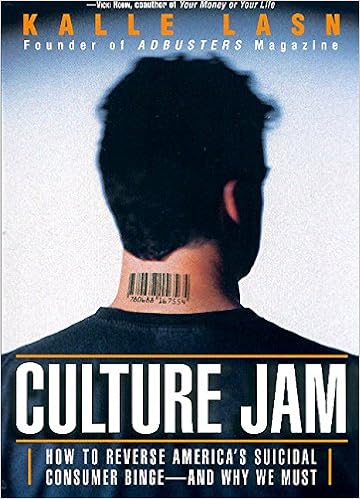
Image result for kalle lasn culture jam